
Ghosts in the Machine
Robert Hare built laboratory instruments to test the séance, and the Seybert Commission judged slate writing indistinguishable from fraud.

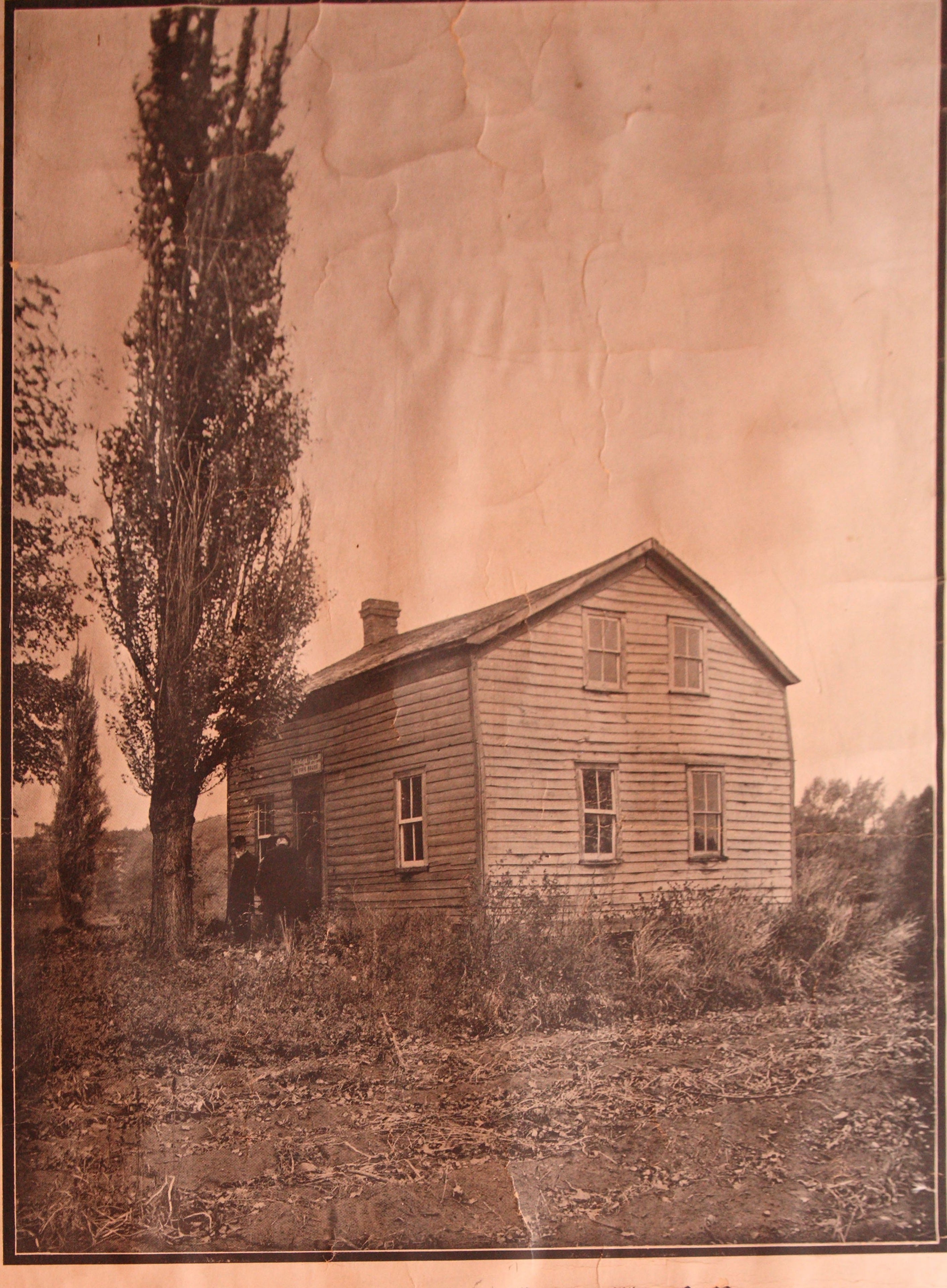
On the night of March 31, 1848, in a farmhouse in the hamlet of Hydesville, New York, near Rochester, the family of a farmer named John Fox went to bed early. For weeks their nights had been disturbed by knocking sounds that no search of the house explained. The fullest early account of what happened next was collected by Robert Dale Owen, a reformer and former congressman, who took the particulars from Mrs. Fox and her children and printed the family’s story in 1860. That night the knocks answered back. Kate, the younger daughter, nine years old, noticed that when her father shook the window sash, the noises replied; being, in Owen’s words, “a lively child, and in a measure accustomed to what was going on, she turned to where the noise was, snapped her fingers, and called out, ‘Here, old Splitfoot, do as I do!’ The knocking instantly responded.” Her mother began to question the noise aloud: “‘Count ten,’ she said, addressing the noise. Ten strokes, distinctly given! ‘How old is my daughter Margaret?’ Twelve strokes. ‘And Kate?’ Nine.” Then she asked about her children: “‘Are they all alive?’ she asked. Silence for answer. ‘How many are living?’ Six strokes. ‘How many are dead?’ A single stroke. She had lost a child.” Neighbors were called in that same night, and the knocks answered them too.
Source: Robert Dale Owen, Footfalls on the Boundary of Another World, 1860, from particulars supplied by the Fox family; as reprinted in Uriah Smith’s period survey Modern Spiritualism.
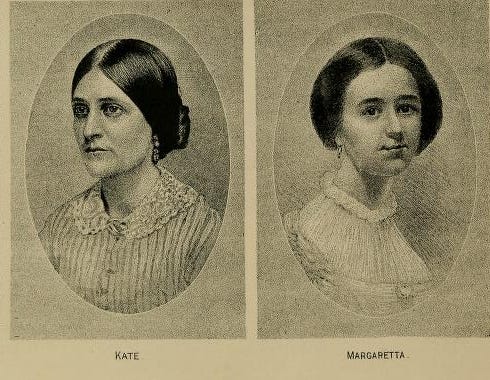
What began as a haunting became a practice. The raps followed the sisters and answered questions wherever they went. Within two years Kate and Margaret were demonstrating them before public audiences, and others began sitting in the same way. The circle, a group of sitters around a table with a medium among them, spread as a parlor practice across the United States and, within the decade, to England and Europe. A speaker at the movement’s thirty-ninth-anniversary celebration claimed that “In thirty-nine years it has grown to ten or fifteen millions of believers, with thousands of mediums, a literature printed in every known language, and converts in every quarter of the globe.”
Source: Professor Keck at the thirty-ninth anniversary of modern spiritualism, Bridgeport, Connecticut, in the Banner of Light, April 9, 1887; as excerpted in Uriah Smith, Modern Spiritualism.
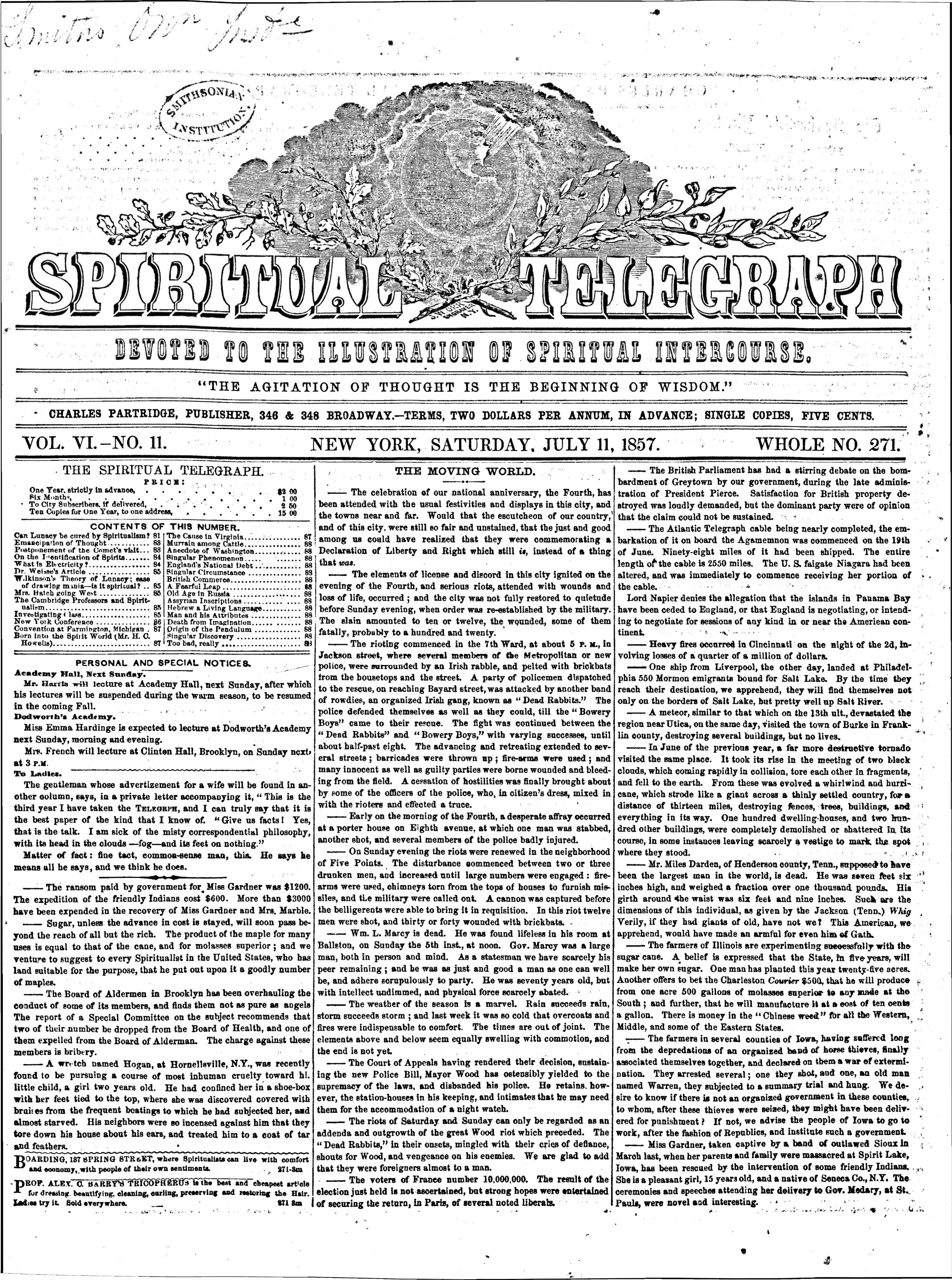
The movement named its practice after a machine. Samuel Morse’s Baltimore–Washington telegraph line had opened in 1844, four years before the knockings. The followers gathered to receive coded messages from the dead and called this the spiritual telegraph. The movement’s first newspaper, founded in New York in 1852, carried the name on its masthead.
A telegraph needs an operator at the key, and any trained operator will do. Morse’s line worked the same for anyone who had learned Morse code. The séance’s operator is the medium, whose constitution, not the table, is treated as the working part. The physical investigations of mediums that followed repeated, in a new setting, the removal experiment of 1784: take the operator’s connection away and see what remains.
The chemist who tested it for himself
Robert Hare was one of the best-known chemists in America: emeritus professor of chemistry at the University of Pennsylvania, a builder of laboratory instruments for more than fifty years, and the inventor of the oxyhydrogen blowpipe, whose flame, the hottest artificial heat then known, melted platinum. When the séance reached America’s parlors, Hare thought what most scientists thought, that it was self-delusion.
The most common of the parlor practices was the turning table: a ring of sitters around a table, hands resting flat on its top, until the table tilted and turned under their fingers and rapped its legs against the floor, and the raps answered questions, counting out numbers and choosing letters as the alphabet was called aloud. The Ouija board descends from this practice. In the summer of 1853 the English physicist Michael Faraday had published experiments on the turning tables: he placed indicators between the sitters’ hands and the table top and showed that the hands were moving the table without the sitters knowing it.
In July 1853 Hare endorsed that result in a letter to a Philadelphia newspaper: “I recommend to your attention, and that of others interested in this hallucination, Faraday’s observations and experiments,” he wrote. He was then past seventy, and by his own account “utterly incredulous of any cause of the phenomena excepting unconscious muscular action.” He wrote of the education behind that incredulity: “In common with almost all educated persons of the nineteenth century, I had been brought up deaf to any testimony which claimed assistance from supernatural causes, such as ghosts, magic, or witchcraft.”
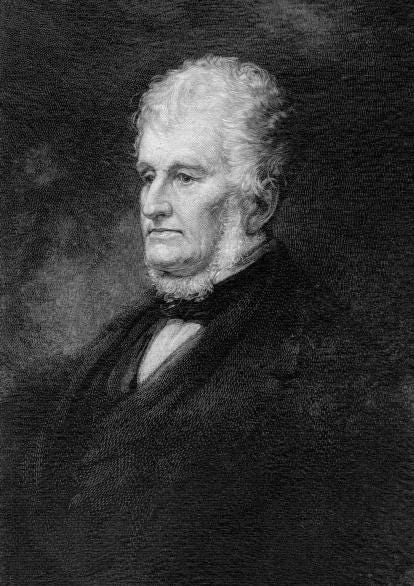
Hare’s letter drew a reply from a Massachusetts instrument-maker named Amasa Holcombe, who wrote that he had watched tables move with no hands on them, cases unconscious muscular action could not explain. Holcombe’s letter, and an invitation from a physician to attend a sitting, drew Hare in. He went as an investigator, and he did what an instrument-builder does. He built devices to take the medium’s ordinary senses and muscles out of the loop.
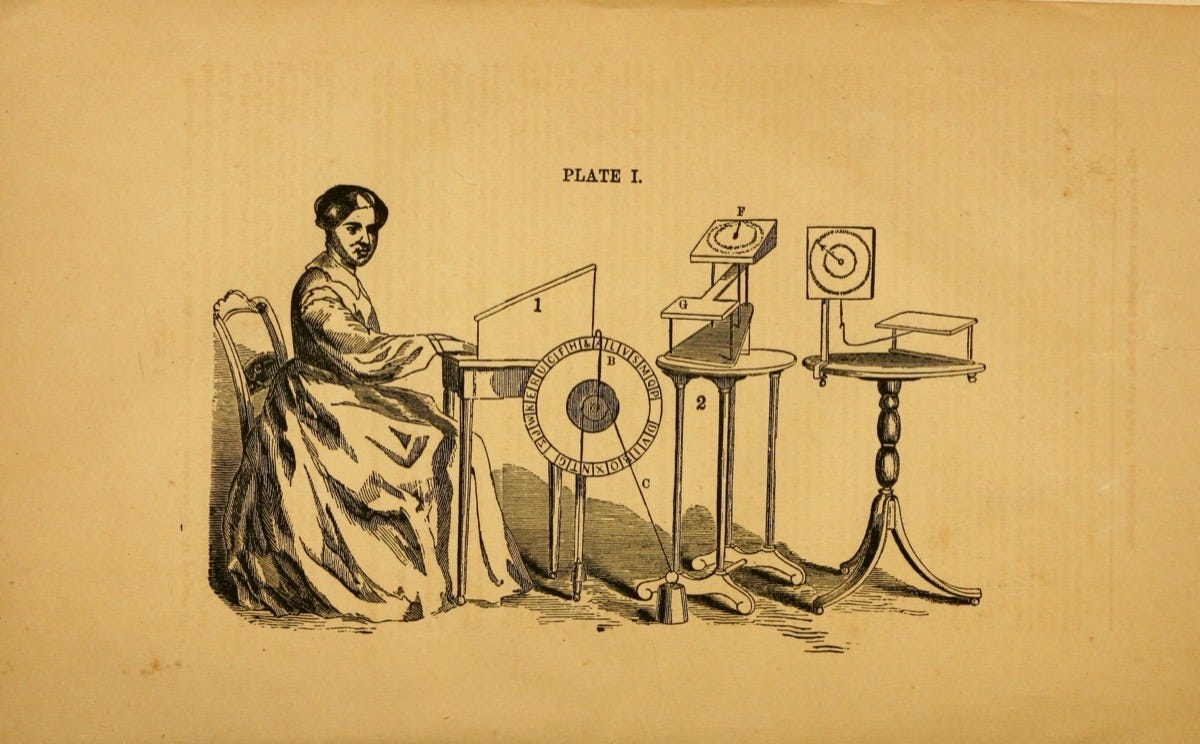
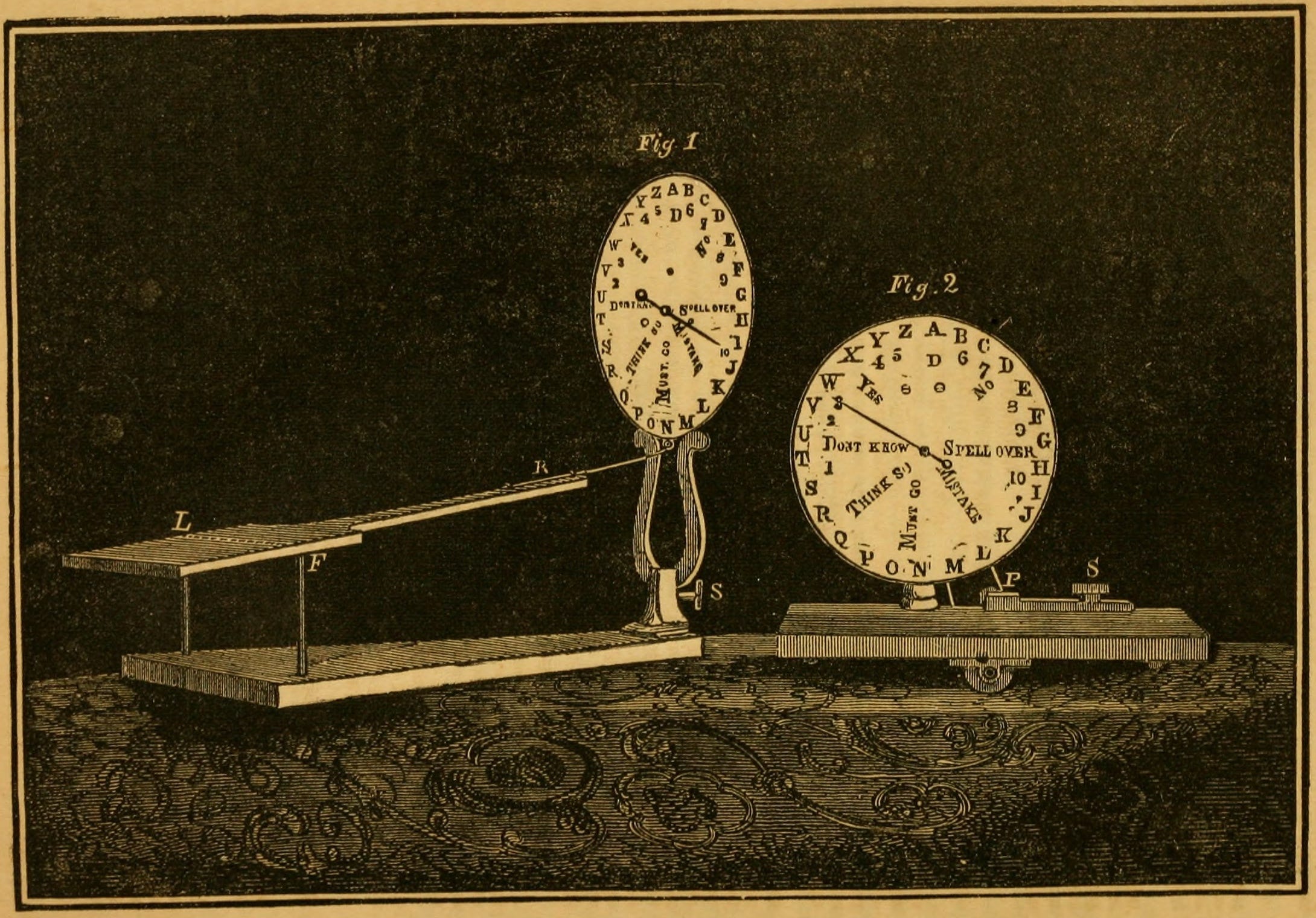
In 1855 he published the result. His machines, he wrote, were designed so that, “if spirits were actually concerned in the phenomena,” they “would enable them to manifest their physical and intellectual power independently of control by any medium.” The principal instrument, which he named the spiritoscope, worked like a séance table with a dial attached. The medium’s hands rested on a small table or lever board. The table’s motions were carried, by a cord and pulley, to an upright disk with the alphabet, the numerals, and a few working answers, yes, no, don’t know, spell over, printed around its face; as the disk turned, a fixed index pointed at one character after another, and messages were spelled out a letter at a time. In the test, a screen between the medium and the disk, or the disk turned to face away from her, kept the letters out of her sight, “so that she could not see the letters on the disk.” If the messages were the medium’s own, blinding her to the letters would stop them.
Hare’s own experiments changed his mind. The instrument he had “contrived to disprove spiritual agency,” he concluded, “demonstrated its existence.” His conversion was complete, and he published it in the vocabulary of his profession: “The existence of spirit agency being thus demonstrated, I am justified in solemnly calling on my contemporaries to give credence to the important information which I have received from spirits, respecting the destiny of the human soul after death.”
The sitting that convinced him began with a failure. With the screen in place and the disk hidden from the medium, “No manifestation took place through the disk, though other indications of the presence of spirits were given.” Hare moved the medium to an ordinary table and put the question to the spirits themselves, through the lettered card used at ordinary sittings, asking whether any change would let them communicate through his instrument. “The reply through the alphabetic card was, ‘Let the medium see the letters.’” The instruction had come from the spirits he was there to investigate. His first thought was that granting this would spoil the experiment. His second was an instrument-builder’s: he let the medium see the disk, and took away her leverage instead, resting her hands on a smooth metal plate that sat on loose brass balls, so that no push of her hands could steer the table. With that arrangement, “as soon almost as the medium placed her hands on the plate resting on the ball, and without any other communication with the table, the disk began to revolve,” and names and communications were spelled as before. Unconscious muscular action, the explanation Faraday had shown and Hare had first accepted, could no longer move the table, and the messages came anyway.
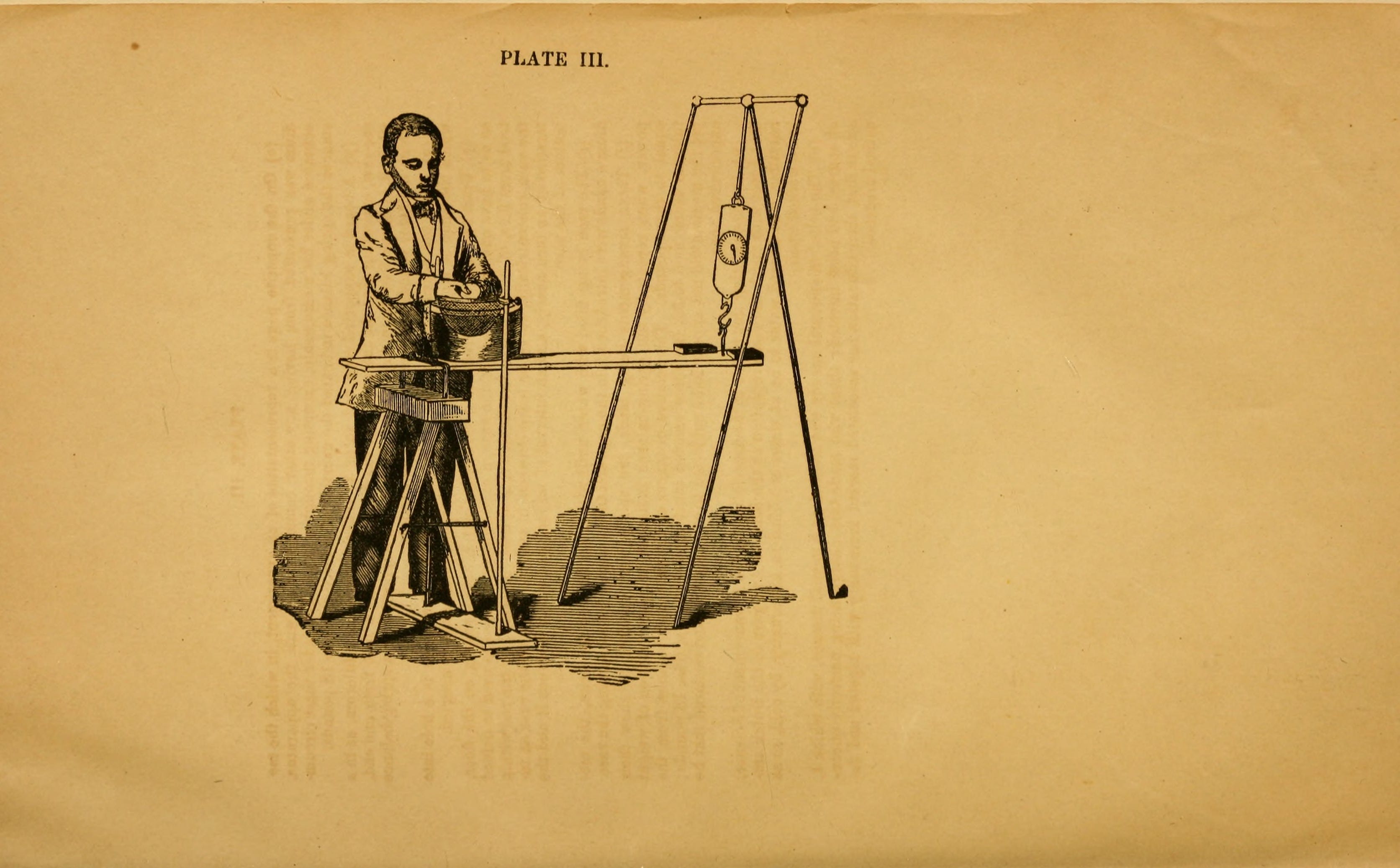
In one experiment the medium did not touch the instrument at all. A board rested on a fulcrum like an unequal see-saw, its long end hung on a spring balance. Near the fulcrum was a glass vase filled with water, and inside the water, held clear of the glass by a wire cage, the medium’s hands were immersed: whatever force reached the board could pass only through water. Under these conditions, Hare wrote, “the spring balance indicated the exertion of a force equal to 18 pounds.”
His colleagues would not examine the machines. Rather than repeat his experiment and show where it failed, they dismissed it untested. Hare wrote of the reaction of the scientific establishment: “It was on stating this result to the Association for the Advancement of Science, that I met with much the same reception as the King of Ava gave to the Dutch ambassador, who alleged water to be at times solidified in his country, by cold, so as to be walked upon.” And further: “The belief in spiritual agency was treated as a mental disease, with which I, of course, had been infected.”
Source: Hare, Experimental Investigation of the Spirit Manifestations, 1855.
The reply through the alphabetic card can be understood in two ways. On one, the medium is writing the messages herself, and needs to see the letters to do it. On the other, it is the magician’s rule stated from the séance’s own side: the messages come through this medium, or they do not come at all. Hare, a chemist of international standing, considered both and took the second. The scientific world did not agree with him, and stopped taking his work seriously.
The sealed cord
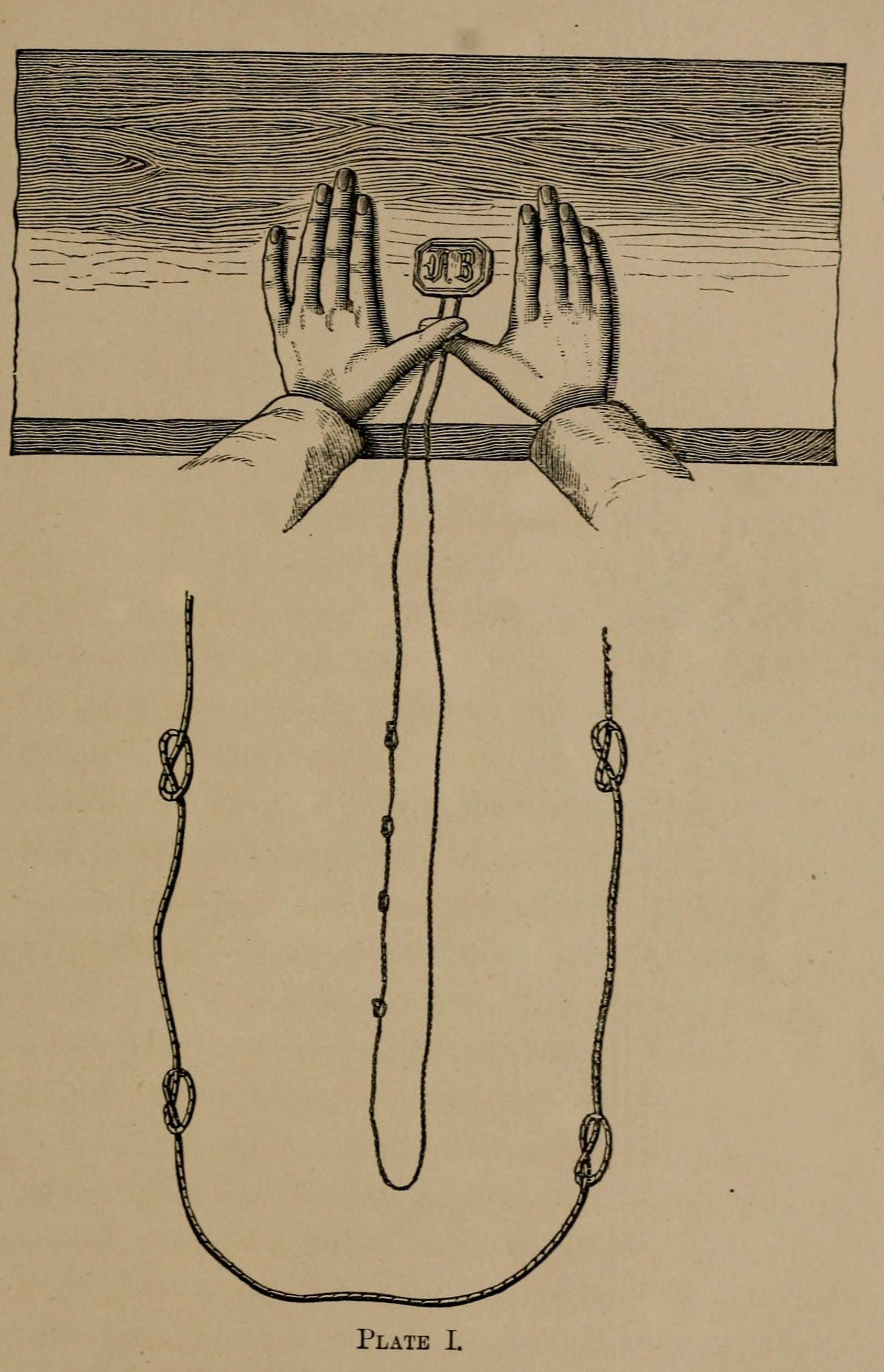
Hare was not the only scientist the séance converted. Johann Zöllner, professor of physics and astronomy at the University of Leipzig, investigated the American medium Henry Slade in the winter of 1877. Slade’s sittings produced physical effects rather than spelled-out messages: writing that appeared on closed slates, and knots that formed in a length of sealed cord. When a cord has its two ends tied together and the join sealed, it forms a closed loop with no free end. Tying a knot requires a free end to pass through, and a sealed loop has none, so no new knot can be made in it unless the seal is broken. Zöllner set out to see whether a knot would form while the seal stayed whole, and he arranged the sealing so that Slade could never touch it. He prepared four hemp cords, their ends tied and sealed, one sealed with his own seal the evening before and not in Slade’s presence, two others sealed by his colleague Wilhelm Weber in Weber’s own rooms.
Zöllner selected one cord, hung the sealed loop around his neck until the sitting began, and kept the seal on the table in front of him with Slade’s hands in view. He had argued beforehand that a knot in a sealed loop lay within the power of a being able to act in a fourth dimension of space, a direction outside the three we move in. The problem was not his own. He traced it to a note left by the German mathematician Carl Friedrich Gauss, who had named, as an open question in the geometry of position, the calculation of “the number of the twistings of two closed and endless cords.”
Passing a cord through itself, in three dimensions, requires a free end; a fourth direction would carry the cord around the obstruction instead, and the loop could stay sealed. Zöllner wrote: “If a single cord has its ends tied together and sealed, an intelligent being, having the power voluntarily to produce on this cord four-dimensional bendings and movements, must be able, without loosening the seal, to tie one or more knots in this endless cord.” The seal was never broken, and four knots appeared in the loop.
Zöllner published the case in Transcendental Physics and named his witnesses, Weber and two other Leipzig professors, colleagues “who are perfectly convinced of the reality of the observed facts, altogether excluding imposture or prestidigitation [sleight of hand].”
Source: Zöllner, Transcendental Physics, translation of Massey, 1880.
Seven years later the medium Slade came before a university commission and received the opposite verdict, and the commission knew of Zöllner’s work. Its report carries an appendix on the Zöllner sittings, for which its secretary traveled to Germany to interview the surviving participants. The commission’s ground was not that it disagreed but that its witnesses were unfit for the work: “any estimate of Zoellner’s testimony, based merely upon the eminence in science of his name and those of his collaborateurs, neglecting to give attention to their disqualifications for this kind of work, cannot be a fair or a true estimate.” Zöllner had found the same medium genuine. The commission found him fraudulent.
Source: Seybert Commission, Preliminary Report, 1887, from the summary of the appendix on the Zöllner sittings.
The commission endowed by a believer
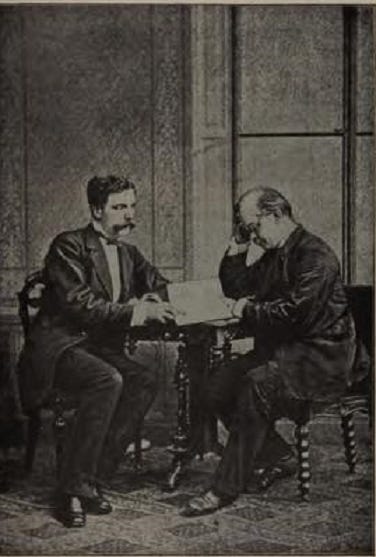
Henry Seybert, a Philadelphia philanthropist and a convinced spiritualist, died in 1883 and left the University of Pennsylvania an endowment for a chair of philosophy, on the condition that the university appoint a commission to investigate modern spiritualism. The university accepted, and the Seybert Commission began its sittings in 1884. Its acting chairman was Horace Howard Furness, the era’s leading Shakespeare scholar. Among its members was Joseph Leidy, the Philadelphia naturalist who in the same years was watching John Worrell Keely’s demonstrations across town. The commission engaged the movement’s best-attested mediums and sat with them for three years.
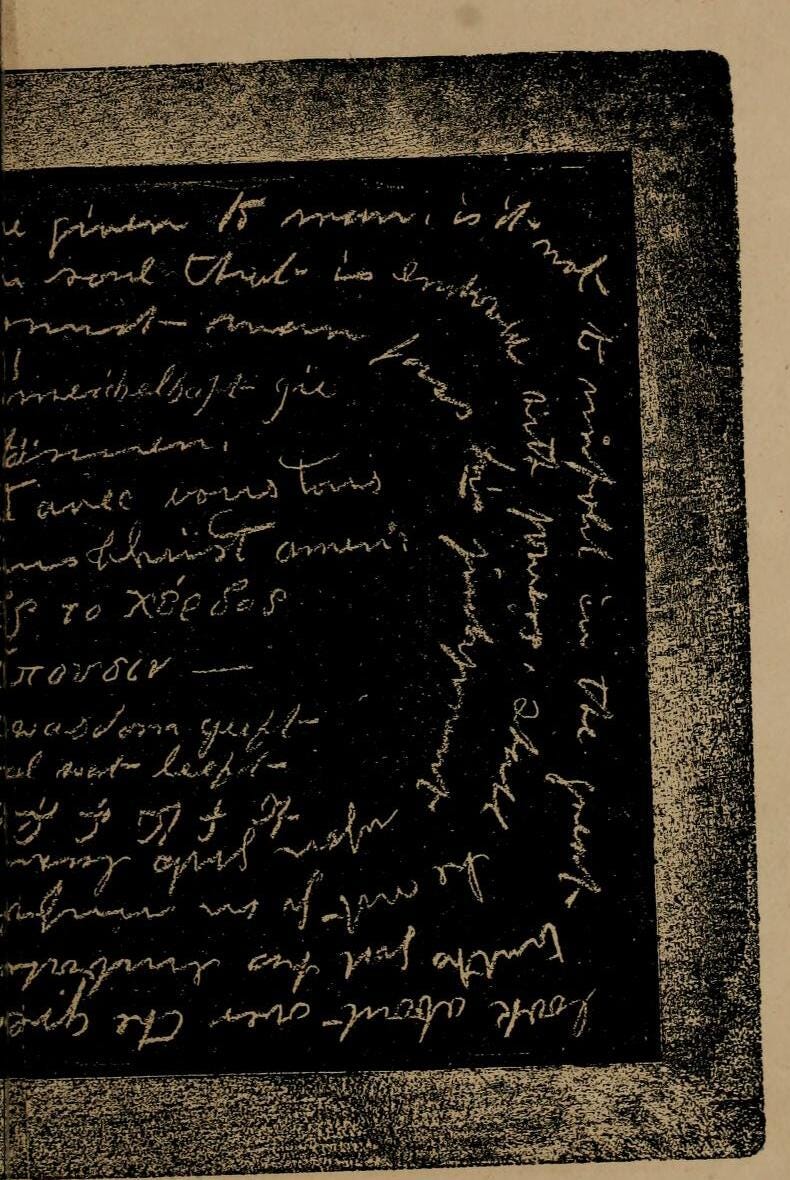
By then the practice had three branches, and the commission tested each. Rappings, the knocking sounds of the Hydesville farmhouse, were now produced at sittings on demand and spelled messages by counting and by choosing letters. In slate writing, a common school slate, wiped clean and held under the table’s edge or shut against a second slate, came back bearing a message in slate pencil. In materializations, forms and faces of the dead were said to appear at sittings in darkened rooms, often from a curtained cabinet in which the medium sat.
The report states the commission’s rule: “we must form those conclusions solely on our own observations; without at all imputing untrustworthiness to the testimony of others we can really vouch only for facts which we have ourselves observed.”
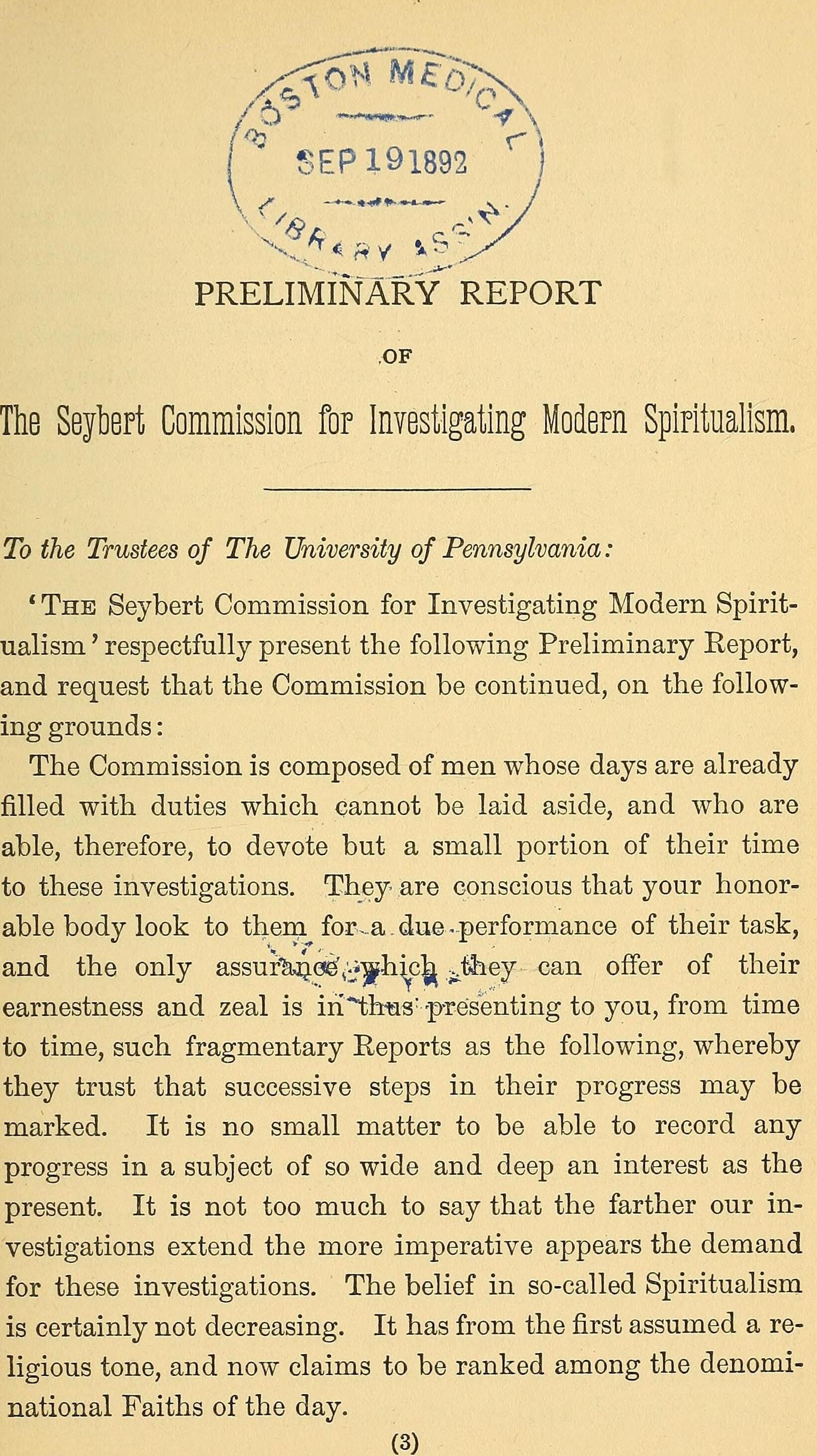
The sittings were stenographed, and the transcripts are printed in the report. Among the mediums examined was Margaret Fox Kane, one of the two sisters whose knockings in the 1848 farmhouse had begun the movement. At one of her sittings Kane herself proposed the test. Leidy asked whether Henry Seybert was present. Seybert had paid for the commission, and he was dead. Three raps answered, so weak that the record marks them as feeble.
Its Preliminary Report, published in 1887, found, of the celebrated slate-writing medium Henry Slade, that “the character of those which passed under our observation was fraudulent throughout.” It also qualified that finding. The writing “is performed in a manner so closely resembling fraud as to be indistinguishable from it. It would be a mere matter of opinion that all Independent Slate Writing is fraudulent; what is not a matter of opinion is the conviction, which we have unanimously reached as a Commission, of its non-spiritual character in every instance that has come before us.”
Source: Seybert Commission, Preliminary Report, 1887.
Indistinguishable from fraud
The commissioners did not write that the phenomena were fraud. They wrote that the phenomena were indistinguishable from fraud, and they confined their unanimous conviction to the instances that had come before them. That distinction is the difficulty. To an outside investigator, two different things leave the same record. A fraud works under the medium’s own conditions and fails under the investigator’s. A real connection that depended on the medium would do the same. The commission could establish only what happened under its own conditions, and under them nothing came, or what came was what a stage performer could produce. Whether that convicted the mediums or merely described them is what indistinguishable from fraud was chosen to leave open.
A report of a result is a claim, not yet a finding. It becomes a finding when other people, following the procedure as published and with nothing invested in the outcome, get the same result. The practice is called independent replication, and the case it exists to catch is precisely this one, a demonstration that runs only under conditions its claimant sets, and only in that person’s presence.
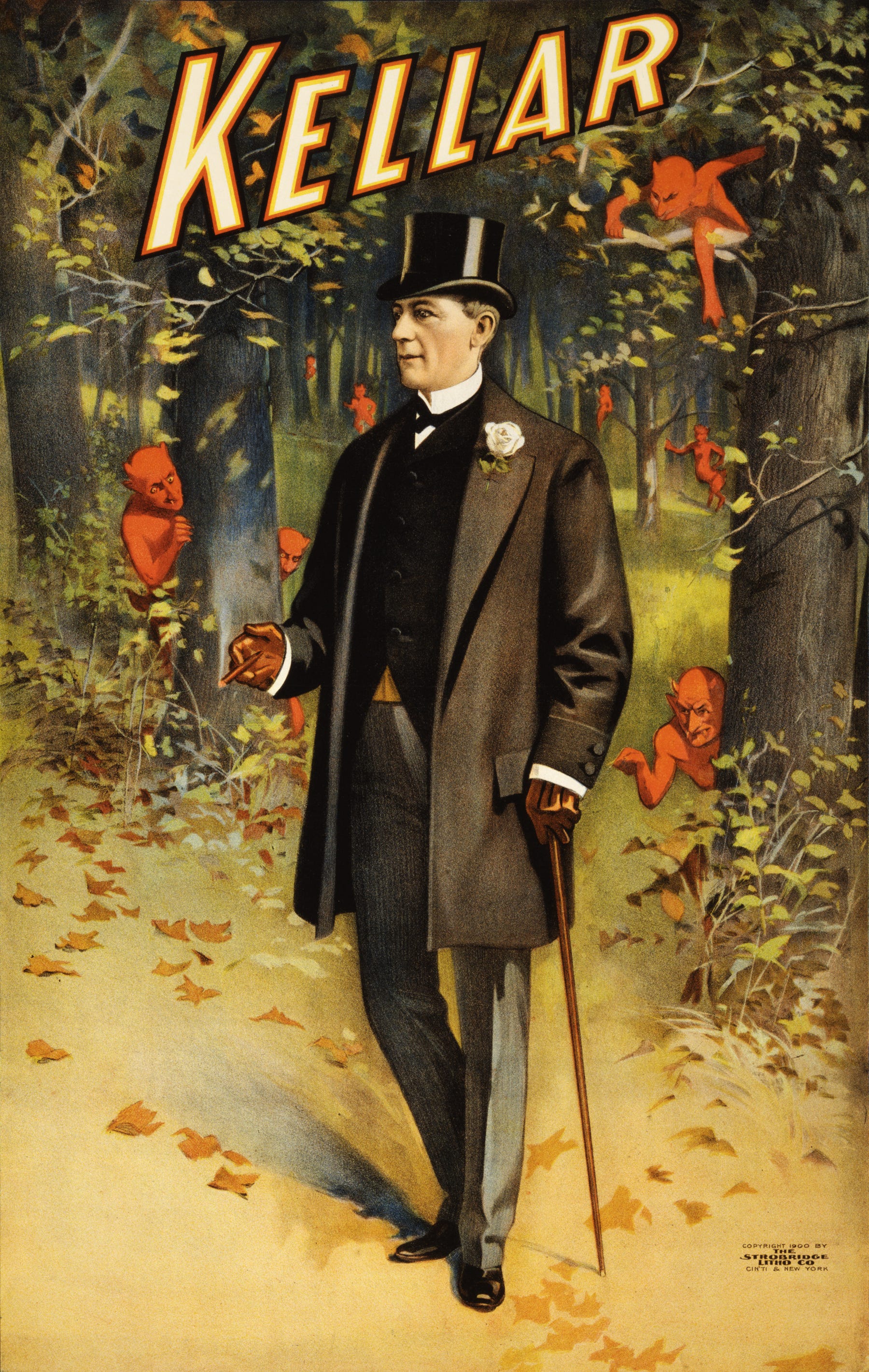
Under test conditions, across every medium the commission engaged, nothing new was produced. The report closes: “we beg to express our regret that thus far we have not been cheered in our investigations by the discovery of a single novel fact.” Meanwhile the stage magician Harry Kellar, then exhibiting in Philadelphia, set out to show that ordinary trickery could do the same work. He produced for three of the commissioners slate writing more remarkable than any a medium had given them, and in April 1887 revealed his methods to them.
The commission’s spiritualist counselor, Thomas R. Hazard, sat through a session that produced an hour and a half of nothing. He explained the empty session by the night before, when alone with the medium the messages had come “thick and fast.” By that reasoning, a sitting that produced nothing showed only that the conditions were wrong, not that the medium had no power. When Kellar reproduced Slade’s slate effect, Slade did not concede a trick but declared the magician himself a medium: “He is a Medium. He does that work precisely as I do it.”
Source: Slade on Kellar, in the Sellers transcript, Seybert Report appendix.
If reproducing the effect makes a man a medium, reproducing it can never disprove mediumship. Each new demonstration only adds another medium.
By the time the report was printed, the séance had been tested with instruments for forty years, from Hare’s bench to the university’s sitting rooms, and nothing ever happened without a medium: no table moved, no slate wrote, no disk spelled, unless one of these particular people was in the circle. No one, on either side, ever produced the one result that would have ended the question: an effect with the medium gone.
Twelve years after the commission signed its report, investigators in the same city took up the floorboards of Keely’s workshop, looking for what the spiritoscope and the sealed slates had been built to find: whatever connected one particular human being to an instrument that ran for no one else. The instruments changed for half a century; the question they were built to answer did not.
---
Part 4 of “The Occult History of Technology.” Previously: The First Blinded Experiment.