

Renaissance magic had a rule, repeated across its standard books: the instruments of the art work only for a prepared human being. The operator was to be schooled in the knowledge of the day, disciplined in attention, and made morally fit, and without that preparation the procedures gave nothing, however exactly they were followed. The procedures could be copied; the preparation could not. When John Worrell Keely’s Philadelphia motor died with its maker in 1898, having run for no one but him through twenty-six years of demonstrations, it behaved as the rule specified, and Keely’s defenders said as much: the force, they wrote, came from the man.
The rule’s fullest statement had been in print for three and a half centuries by then, and the man who wrote it lived a public life. Heinrich Cornelius Agrippa von Nettesheim was born in Cologne in 1486, served the emperor Maximilian first as secretary and then as soldier, lectured on theology, and was for a time in the pay of the Duke of Savoy, his biographer thought as a physician. He hated his soldiering, and wrote of those years as years of blood and plunder. At Metz in 1519 he defended a peasant woman accused of witchcraft, discredited the Inquisitor’s case against her, and won her release; it ended his career in that city, where people avoided being seen with him in the street. His great book also had to be defended: the Inquisitor of Cologne denounced it, Agrippa answered the charge before the city’s magistrates, and the Occult Philosophy was printed in July 1533 with the printer’s name left off the title page. Agrippa died two years later.
Source: the biographical account in the Tyson edition of the Occult Philosophy, drawing on Morley’s Life of Agrippa.
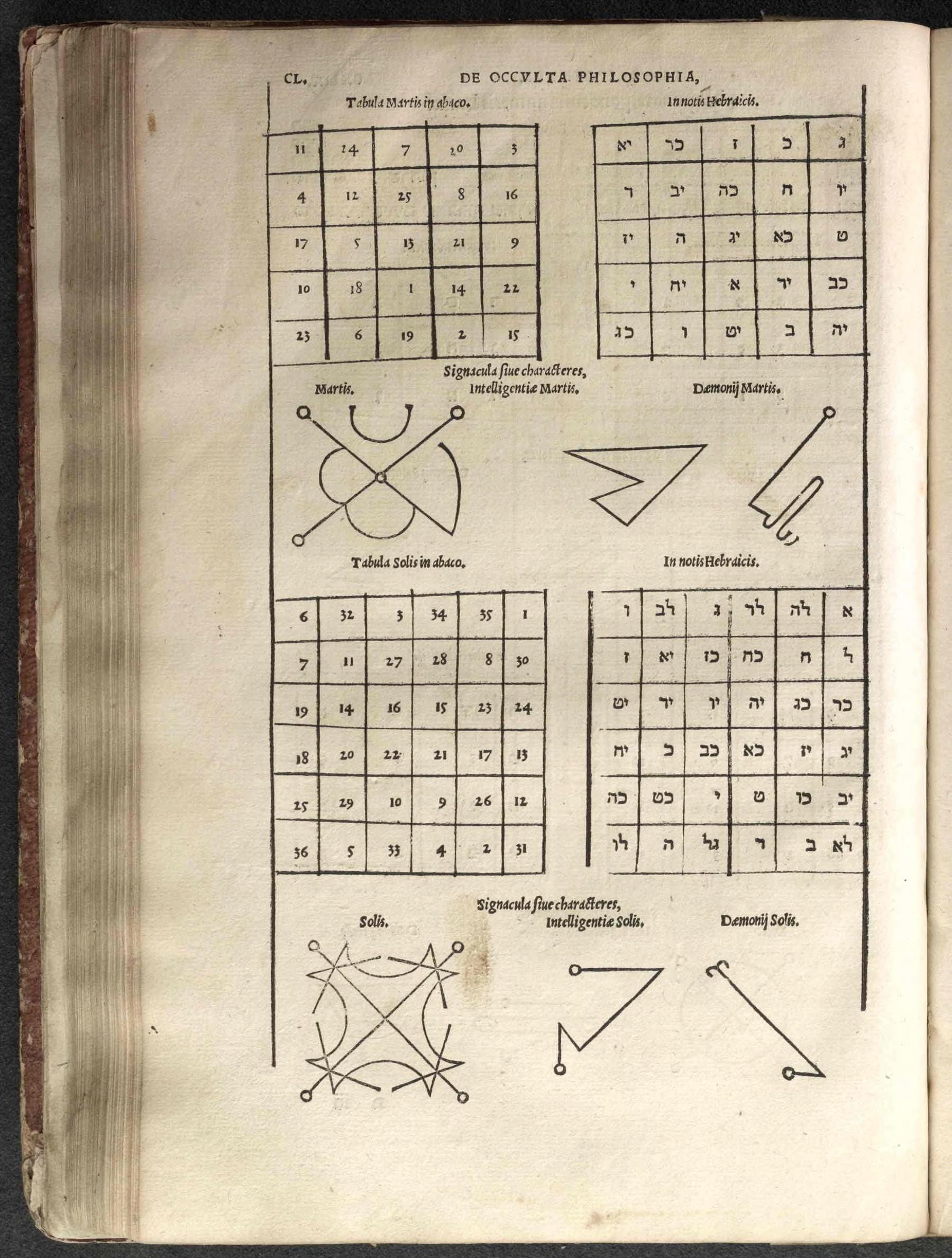
The Occult Philosophy was the standard manual of Renaissance natural magic. Natural magic meant working with hidden but lawful powers in nature, as distinct from conjuring demons, and its range was wide: the hidden properties of herbs, stones, and animals, and which of them heal which disease; the sympathies binding metals to planets; numbers, figures, and the tables of the planets; sounds, words, and written characters; the names and ceremonies of religion. Agrippa arranged all of it in three books, one for each level of the world as the tradition counted them: a first book on the natural world and the hidden virtues of things; a second on the celestial world, its numbers, its figures, and its stars; and a third on the divine world, its names, its spirits, and its rites.
Agrippa states the first requirement in his second chapter, before any procedure is given: “Whosoever therefore is desirous to study in this faculty, if he be not skilled in natural philosophy, wherein are discovered the qualities of things, and in which are found the occult properties of every being, and if he be not skillful in the mathematics, and in the aspects, and figures of the stars, upon which depends the sublime virtue, and property of everything; and if he be not learned in theology, wherein are manifested those immaterial substances, which dispense, and minister all things, he cannot be possibly able to understand the rationality of magic.” Before a person can work in this art at all, he must be trained three ways: in natural science, in mathematics, and in theology. The training of the worker comes before the work.
Source: Book I, chapter 2, in James Freake’s 1651 English translation, in Donald Tyson’s modern-spelling edition.
The book returns to the requirement at its close, and there it says that everything else depends on it. There is, Agrippa writes, a “mystical and secret matter, necessary for everyone who desireth to practice this art, which is both the beginning, perfection, and key of all magical operations, and it is the dignifying of men to this so sublime virtue and power.” Dignifying is the tradition’s own word for making the operator fit: by study, by discipline, and by consecration, the person is raised toward the level of the power he intends to use. The human understanding “is the only worker of wonders,” and when it is sunk in the business of the body it commands nothing: “therefore many prosecute this art in vain.” The working power, in other words, is not in the procedures at all. It is in a state of the human being, and that state must be acquired. For the person who attempts the operations without it, the same chapter gives the outcome: “but whosoever beyond the authority of his office, without the merit of sanctity and learning, beyond the dignity of nature and education, shall presume to work anything in magic, shall work in vain, and deceive both himself and those that believe on him, and with danger incur the displeasure of the divine powers.” The unprepared operator does not merely fail. He fails, deceives himself, deceives his audience, and comes to an ill ending.
Source: Book III, chapter 3.
The rule in each of the three books
The requirement is not one chapter’s aside. It appears in each of the three books, fitted to each book’s subject, and Agrippa cross-references it himself.
Book I, the book of the natural world, says what the worker’s mind is: “he that works in magic, must be of a constant belief, be credulous, and not at all doubt of the obtaining the effect … distrust and doubting doth dissipate, and break the virtue of the mind of the worker, which is the medium betwixt both extremes.” The mind of the worker is the medium: the thing the operation passes through, standing between the power and its object. Belief is not an attitude the worker would do well to have; it is a working condition of the channel. And doubt does not merely discourage the worker. It breaks the channel, and the operation stops.
Book II, the book of the celestial world, carries the rule into the most procedure-like operation the art had: the casting of lots. Lots are dice, drawn slips, thrown counters, instruments of chance, built so that no skill enters the outcome. Agrippa writes that even these answer the soul of the person who casts them: the fall of the lots takes direction from a soul carried into the full strength of its desire, and the reason, he says, was already given, “as we said in the first book.” Even the instrument of pure chance, on this account, has the operator inside it.
Book III, the book of the divine world, cites Book I once more (“for how much a constant credulity can do, we have spoken in the first book”) and then makes the widest statement in the whole work: “incredulity and diffidence doth weaken every work not only in superstition, but also in true religion, and enervates the desired effect even of the most strong experiments.”
Source: Book I, ch. 66; Book II, ch. 54; Book III, ch. 4, in James Freake’s 1651 English translation, in Donald Tyson’s modern-spelling edition.
In the English of 1651, experiments means practical trials and operations of any kind: the procedures a person performs expecting a definite result. So the last sentence reaches past magic altogether. Agrippa is not saying that magic fails for the doubtful. He is saying that every work fails for the doubtful: superstitious works, religious works, and practical procedures alike. The state of the worker is a general condition of success, of which magic is one case. On this account there is no fully neutral procedure anywhere; in whatever a human being undertakes, the inner state of the human being is one of the working parts. A modern laboratory is built on the opposite assumption: an experiment is designed exactly so that the experimenter’s state of mind cannot matter, and an instrument is well made exactly when anyone can operate it. The two assumptions contradict each other. And the investigations of the following centuries, the commissions, the séance tests, and the courtrooms, all had the same form: an instrument said to obey Agrippa’s assumption, examined by people working from the laboratory’s.
Assembled from its statements, this is the magician’s rule: every operation passes through the human being who works it; the operator’s formed and undoubting constitution is a working part of the operation; and no exactness of procedure can replace it.
Agrippa also describes how the rule looks from outside, in ordinary life, where no one calls it magic. If the constitution of the person is a working part, then two people can follow the same procedure exactly and end differently, and the difference will stay invisible as long as only the procedure is examined: “So it falls out that some profit more in any science, or art, or office, in a little time, and with little pains, when another takes much pains, and studies hard, and all in vain.” The everyday fact that some people succeed quickly where others fail with more effort is, in Agrippa’s account, the same rule showing itself outside magic: the difference lies in the constitution of the person, not in the diligence of the procedure.
Source: Book III, chapter 22.
A component specification
In engineering terms, what Agrippa wrote is a component specification. A parts list states what a device needs in order to function: each part, its position, and the properties the part must have. Remove a part, or substitute one that does not meet the specification, and the device does not run. Agrippa’s rule treats the human operator as a part in this sense. The part has requirements, the ones the book opens with: training in natural science, in mathematics, in theology, and the fitness Agrippa called dignity. It has failure modes: doubt, missing training, a person never made fit. And without it, nothing else in the operation matters. The instrument alone does not act. The instrument plus the prepared human acts.
To a modern engineer, the familiar thing here is the structure: every device has a parts list, and every part on the list has required properties. The unfamiliar thing is what this particular list requires, because it requires nothing of the metal and everything of the man: his training, his attention, and his moral state. A modern specification demands properties of the wiring; Agrippa’s demands properties of the person.
Ficino and Boehme
Agrippa stated the rule most fully, but he neither invented it nor ended it.
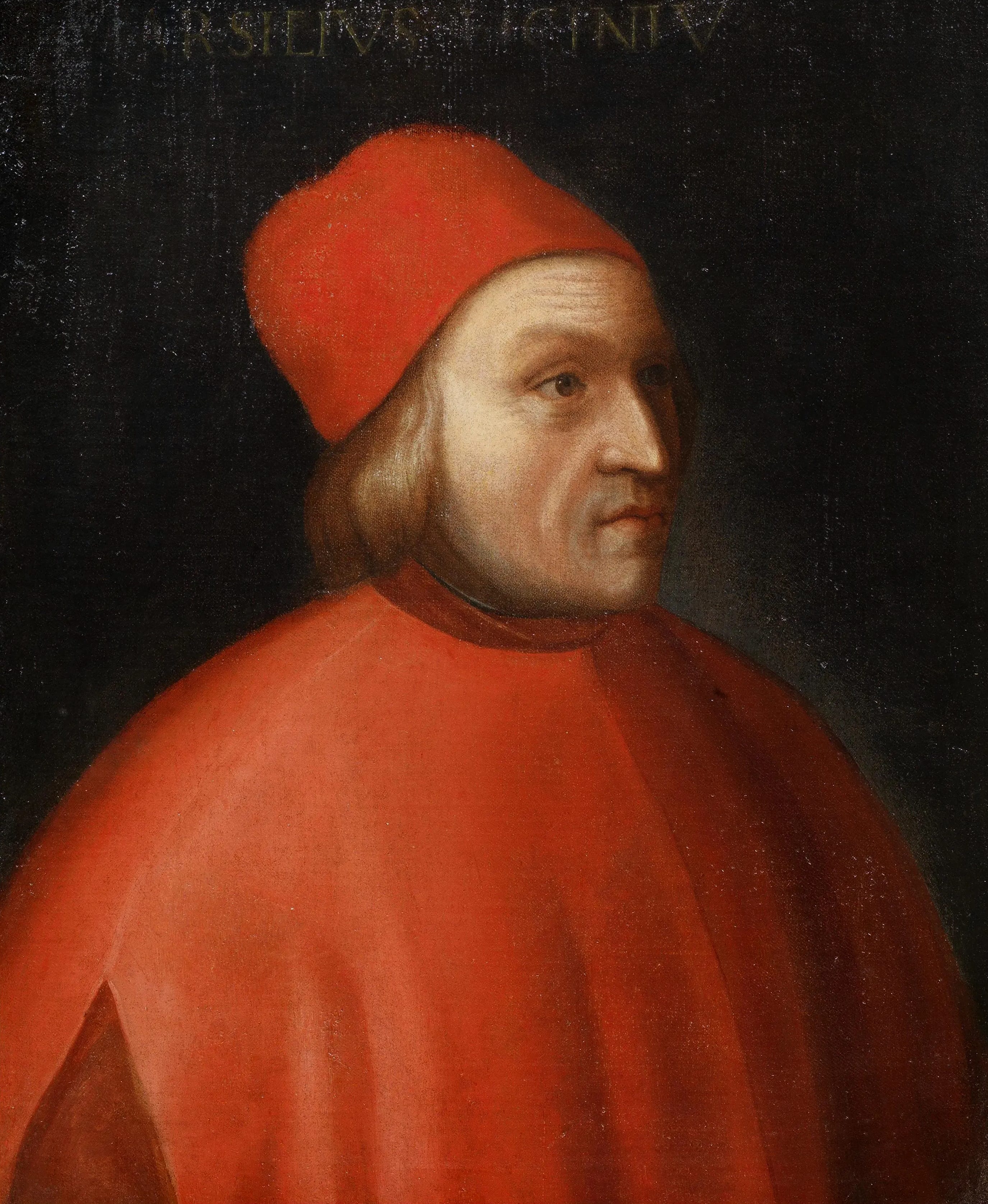
Forty-four years before the Occult Philosophy was printed, Marsilio Ficino, the Florentine priest and philosopher who translated Plato and the Hermetic writings for the Medici, published Three Books on Life (1489), a manual of medicine and astrological practice. Part of that practice was the making of images: figures engraved on stone or metal at a chosen astronomical moment, in the belief that the object took in the influence of the stars at that moment and carried it afterward for the person who wore it. The book describes the practice concretely: “in order to bring two people together in passionate love, they used to fashion an image when the Moon was above the horizon and was coming together with Venus in Pisces or Taurus.” And the operator’s state is written into the instructions. One chapter carries it in its title: on the power of images, “And concerning the Emotional State of the User and Operator.” Ficino reports the medical commonplace that “the love and faith of the sick person towards the doctor, a lower and external agent, are very conducive to health,” and sharpens it with the judgment of Avicenna, the Persian physician whose eleventh-century Canon of Medicine was still the standard medical textbook in the universities of Europe, that “this faith does more than medicine.” And of the image-maker himself he writes: “The Arabs say that when we fashion images rightly, our spirit, if it has been intent upon the work and upon the stars through imagination and emotion, is joined together with the very spirit of the world.” The engraving alone was not the operation. The maker’s directed inner state was part of the making, and the wearer’s faith was part of the wearing. The same rule, before Agrippa, in a book of medicine.
Source: Ficino, Three Books on Life, 1489; Book III, chapters 20 and 21, in the translation of Kaske and Clark.
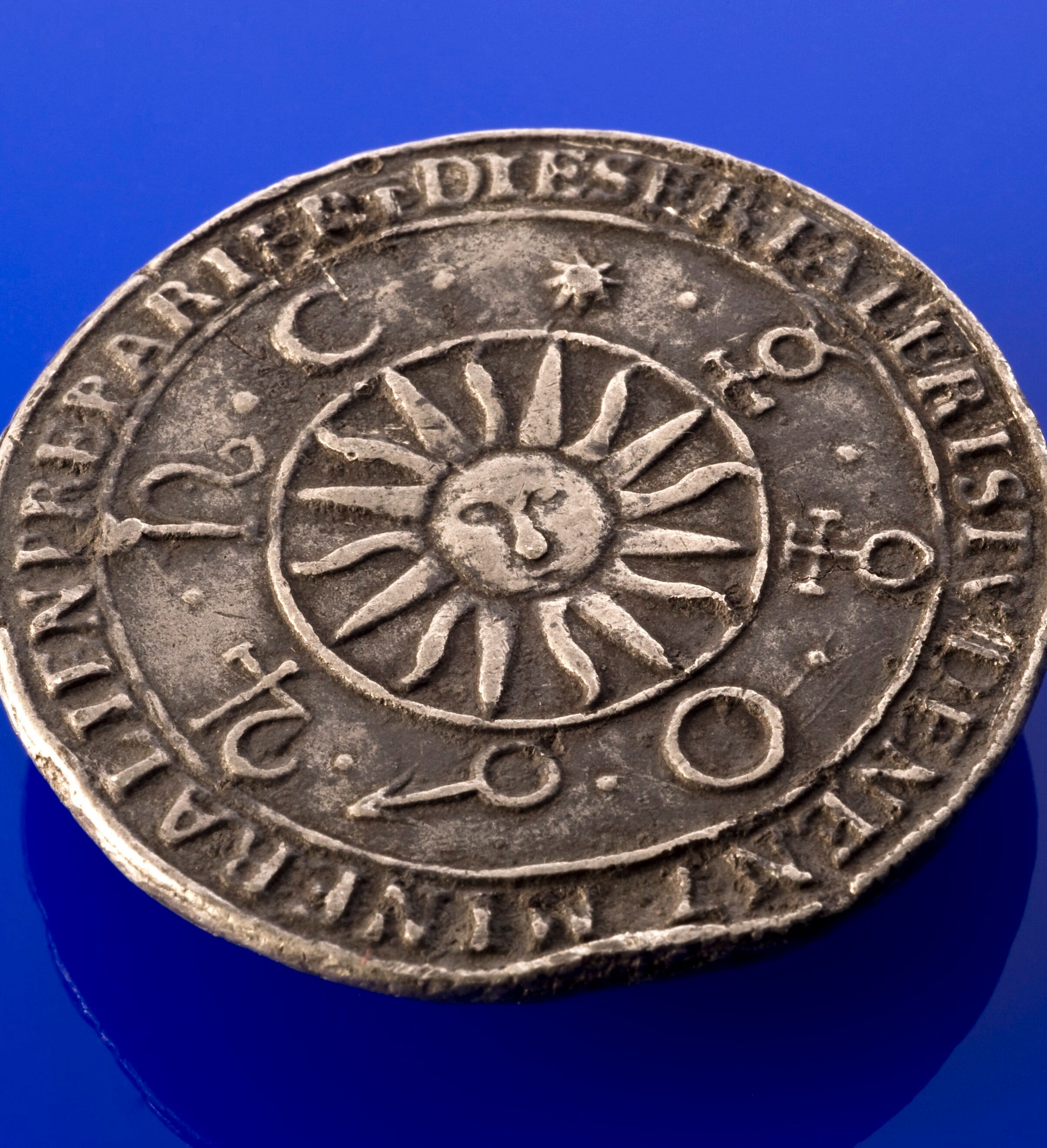
Eighty-nine years after Agrippa’s death, the rule reappears in Görlitz, a German town in the region of Silesia, east of Dresden. Jakob Boehme, a shoemaker of that town whose writings founded Protestant theosophy, opens De Signatura Rerum (1622) with the rule applied to words. Words about God, he says, give the hearer nothing by themselves. A man can hear the sermon and read the book and understand neither, because understanding is not carried in the words; it happens only when the speaker’s spirit strikes an answering form that lies prepared inside the hearer. Boehme’s image for it is a bell: the speaker must have the hammer that can strike my bell. The book then gives the rule as one image: the signature of nature “is a dumb essence; it is as a prepared instrument of music, upon which the will’s spirit plays; what strings he touches, they sound according to their property.” And the same chapter says that the human mind is such an instrument too, wanting nothing but the master who can strike it. On Boehme’s account the rule covers everything. A book, an instrument, and the human mind are alike silent until the prepared player takes them up.
Source: De Signatura Rerum, chapter I; translation of Bax, 1912.
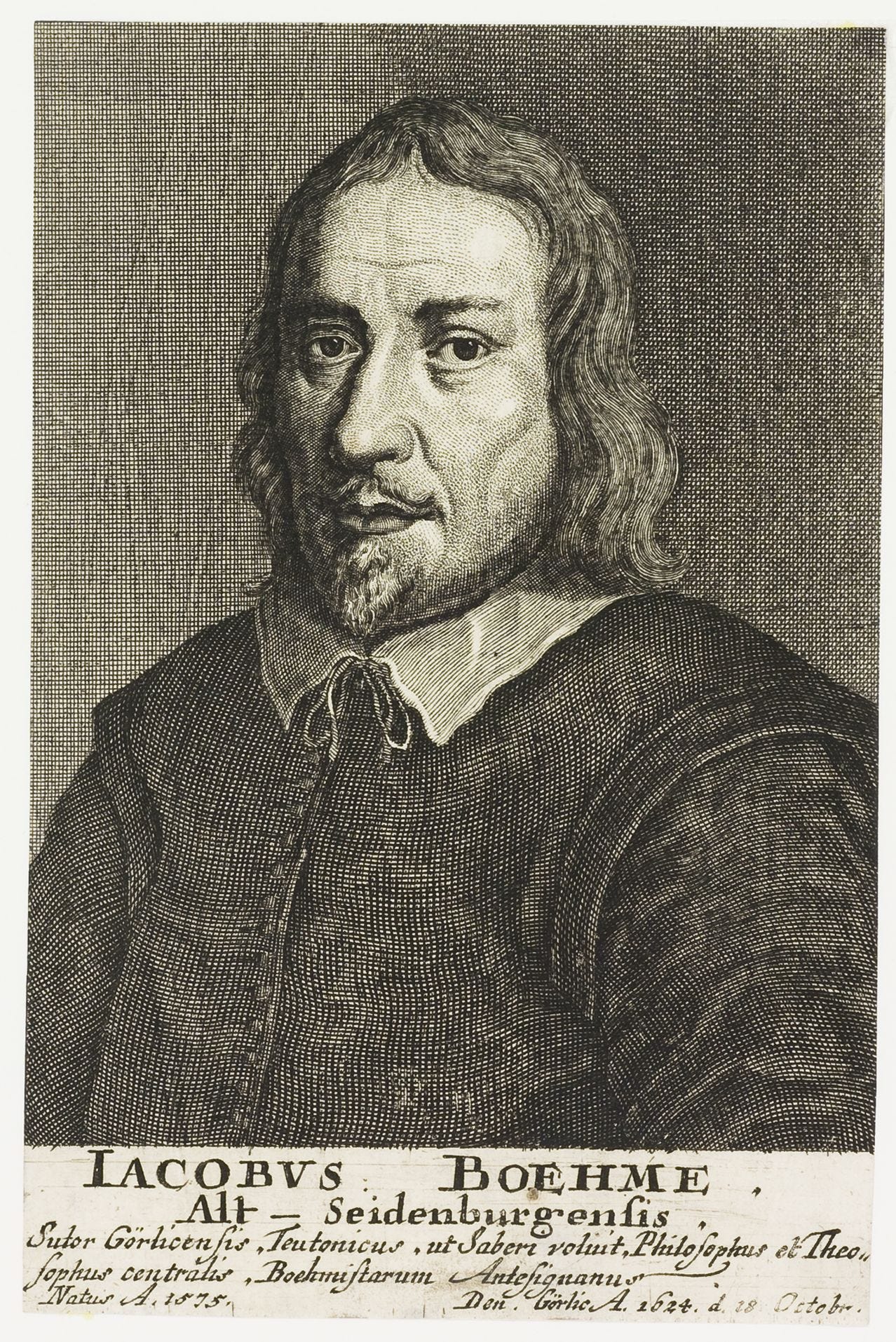
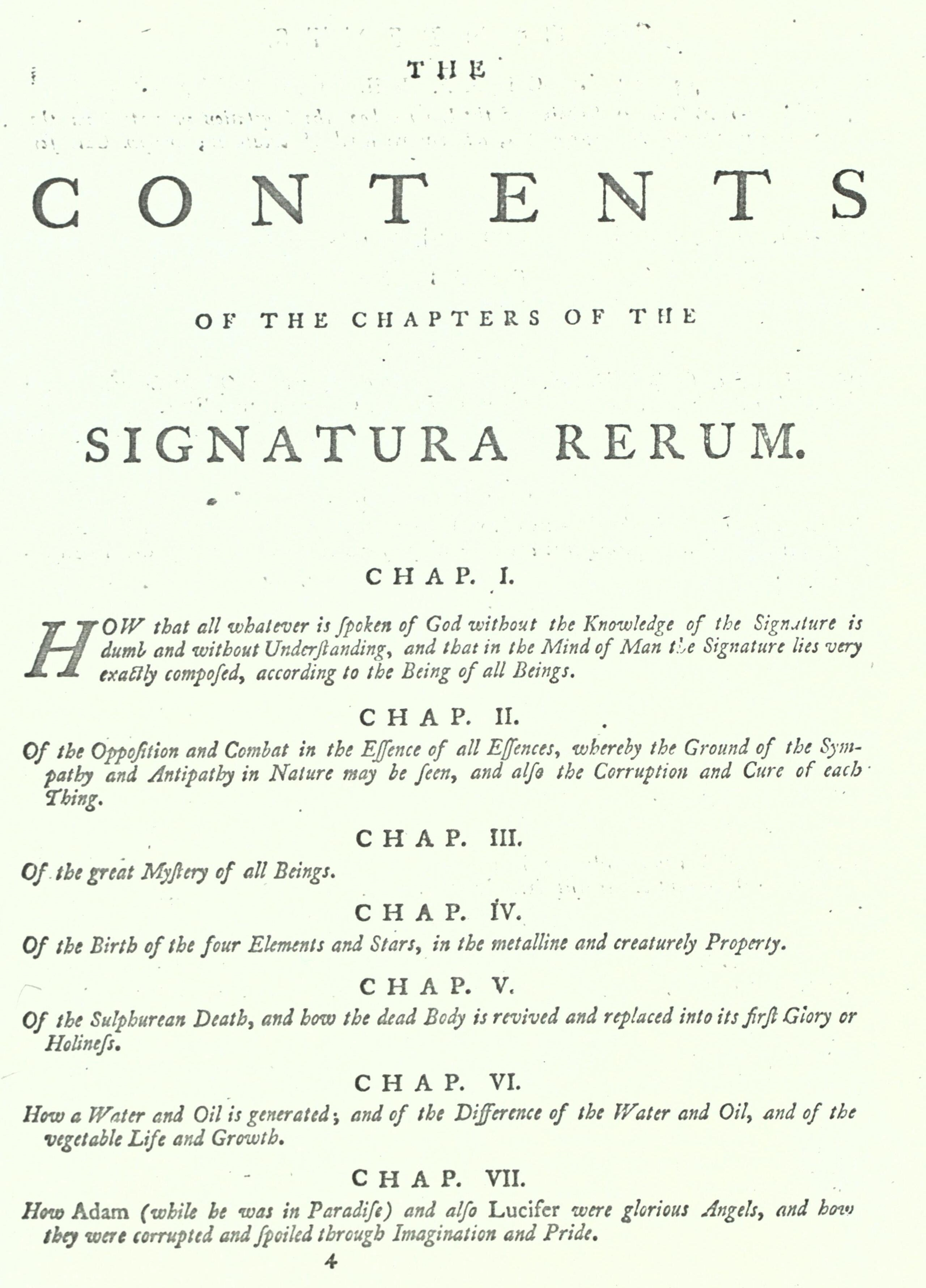
Ficino in Florence in 1489, Agrippa in Cologne in 1533, Boehme in Görlitz in 1622: a physician-priest, a soldier-theologian, and a shoemaker, in three countries across a hundred and thirty years, each stating the same requirement. The work depends on the state of the worker.
What the rule says will happen
The consequences follow from the rule, and the book does not soften them. If the operator is a working part, then removing him stops the instrument, and restoring him starts it. The instrument cannot be transferred: for any other operator, however exactly the procedure is copied, it fails. And the instrument can die. A machine built around one human constitution does not survive that human.
Keely’s motor, whatever else it was, behaved to this specification: it failed for every other operator, it could not be transferred, and it did not survive him. The fraud verdict explains that behavior by hidden compressed air that Keely himself controlled; Agrippa’s rule explains it by the absence of the one prepared operator. Both explanations fit everything that was observed. That difficulty was not new in 1898, and it did not begin with Keely.
In the centuries between the Occult Philosophy and the Keely Motor Company, each of the rule’s consequences was examined in its turn: by a royal commission with Benjamin Franklin at its head, by an American chemist who built séance apparatus of his own, and by a university commission endowed by a believer.
---
Part 2 of “The Occult History of Technology.” Previously: The Machine That Died With Its Maker.